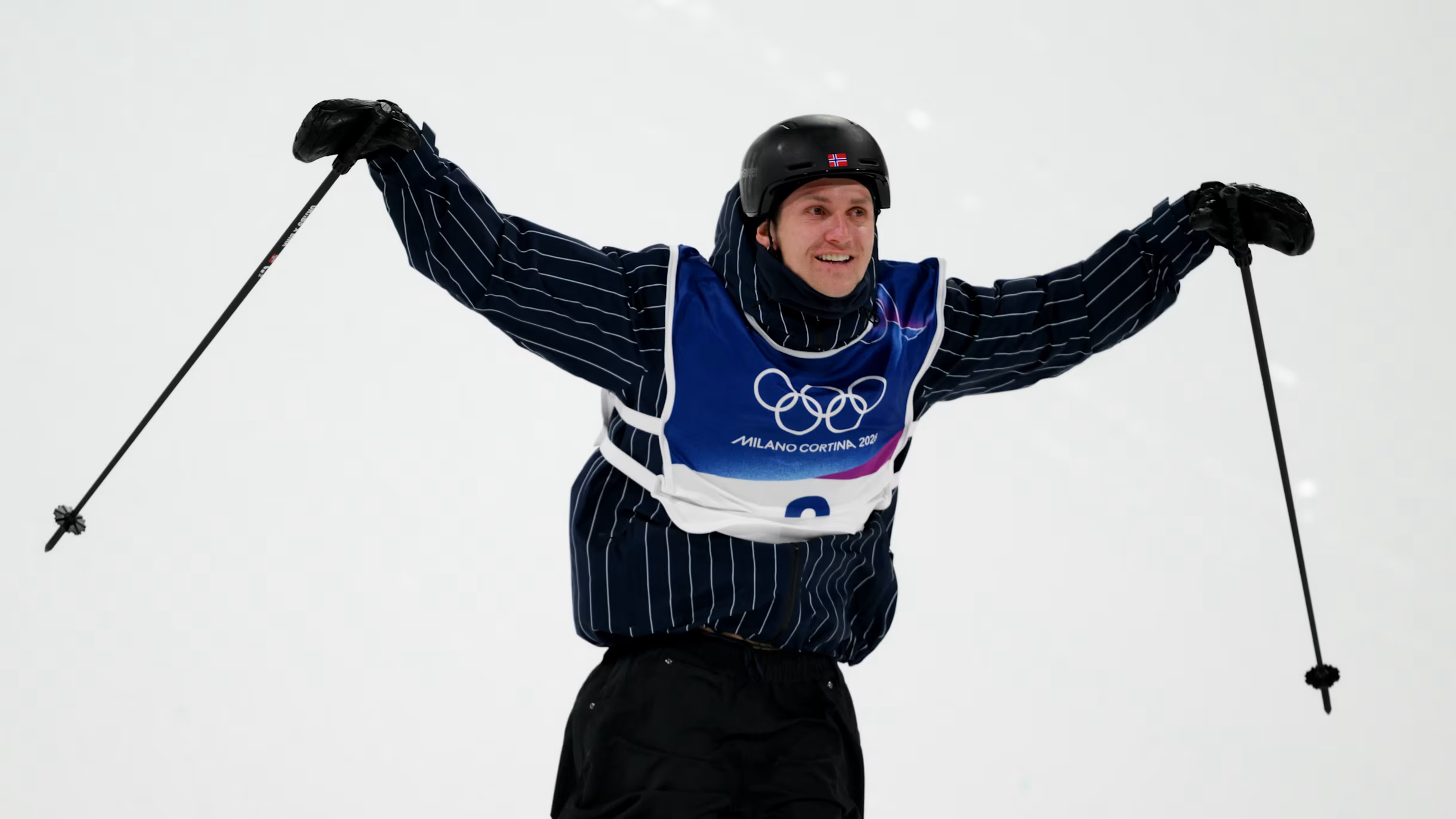
The 2026 Winter Olympics in Milano Cortina reached a fever pitch at the Livigno Snow Park as the world’s elite freeskiers took to the sky for the Men’s Big Air Final. In a sport where “progression” is the only constant, the 2026 Games proved that the ceiling for what is possible on skis simply doesn’t exist.
Here is the deep dive into the night that redefined freestyle skiing.
The Atmosphere: A Night Under the Lights
Livigno has long been a mecca for freestyle athletes, but on the night of February 17, 2026, it felt like the center of the universe. The massive kicker, carved with surgical precision, stood against a backdrop of the Italian Alps, illuminated by floodlights that made every snowflake and spray of powder sparkle.
The qualification round had already set a brutal pace. Mac Forehand (USA) had soared to the top spot with a combined score of 183.00, followed closely by the technical wizard Matěj Švancer (AUT). The defending gold medalist, Birk Ruud, cruised into the finals in third, looking dangerously calm.
The Play-by-Play: Three Rounds of Madness
Round 1: The Statement Jumps
The strategy for Round 1 was clear: put a high score on the board to buy “insurance” for a massive trick in the later rounds.
- Mac Forehand threw down a triple cork 1800 with a mute grab that was so clean it looked like a video game. He posted a 93.25, immediately putting the field on notice.
- Birk Ruud responded with his signature fluidity, landing a switch triple 1980 that earned him a 90.75.
- Matěj Švancer opted for pure style, earning a 92.50 for a trick that involved a nose-butter take-off that left the crowd audibly gasping.
Round 2: The Pressure Cooks
In Big Air, your two best scores from different tricks count. This means if you crashed in Round 1, Round 2 was survival mode.
- Tormod Frostad (NOR), who had a shaky start, bounced back with a massive 96.25—the highest single-run score of the night—putting him right back into the medal conversation.
- Luca Harrington (NZL), the reigning World Champion, showed why he’s the king of consistency, stomping a 92.00 to keep his podium hopes alive.
Round 3: All or Nothing
The final round was a game of high-stakes poker. Riders were attempting rotations that were barely thought possible four years ago.
- The Heartbreak: Local hero Miro Tabanelli went for a quad cork to delight the home crowd but couldn’t quite bring the rotation around, washing out on the landing.
- The Podium Fight: Luca Harrington delivered under immense pressure, landing a technical marvel to secure his place on the podium.
- The Coronation: Birk Ruud needed a solid final score to overtake Forehand. With the poise of a champion, he launched into a switch left-side triple 1980. The landing was “bolts”—absolutely perfect.
The Official Results: 2026 Men’s Freeski Big Air
The scores were razor-thin, decided by the tiniest details in grab duration and landing stability.
| Rank | Athlete | Country | Best Run 1 | Best Run 2 | Total Score |
| 🥇 Gold | Birk Ruud | Norway | 90.75 | 92.50 | 183.25 |
| 🥈 Silver | Mac Forehand | USA | 93.25 | 89.75 | 183.00 |
| 🥉 Bronze | Luca Harrington | New Zealand | 87.75 | 92.00 | 179.75 |
| 4th | Matěj Švancer | Austria | 92.50 | 85.00 | 177.50 |
| 5th | Tormod Frostad | Norway | 96.25 | 80.50 | 176.75 |
Key Takeaways from the 2026 Games
1. The Ruud Dynasty
By defending his Big Air title and having already secured a gold in Slopestyle earlier in the week, Birk Ruud has officially entered the conversation for the “GOAT” (Greatest of All Time) of freestyle skiing. His ability to perform under the highest pressure is unmatched.
2. New Zealand’s Rise
Luca Harrington’s bronze medal isn’t just a win for him; it’s a win for the Southern Hemisphere. New Zealand has become a powerhouse in freestyle sports, and Harrington is their leading light.
3. The “1980” is the New Standard
Just a few years ago, a 1620 was a winning trick. In 2026, you essentially needed to spin 1980 degrees (five and a half rotations) just to see the podium. The level of physical conditioning required for these hits has turned these “ski bum” athletes into elite gymnastic powerhouses.
Note: These Games have shown that the spirit of freestyle is alive and well. It’s not just about the points; it’s about the hug at the bottom of the hill between competitors.
Would you like me to break down the specific technical differences between Birk Ruud and Mac Forehand’s winning runs, or shall we look at the updated 2026 medal table?
A Final Word: The Evolution of the Impossible
As the floodlights at Livigno finally dimmed and the Italian Alps returned to their silent, snowy vigil, one thing became abundantly clear: the 2026 Winter Olympics changed the DNA of freestyle skiing forever. For years, critics wondered if Big Air would hit a “ceiling.” They asked how many times a human could possibly spin, or how many axes they could flip on, before the sport lost its soul to pure physics. But tonight, athletes like Birk Ruud and Mac Forehand provided the answer. It’s not just about the extra 180 degrees of rotation; it’s about the artistry within the chaos.
Watching Ruud hold a blunt grab until the very last millisecond of a triple cork—at speeds that would make a highway patrolman reach for his radar gun—reminded us that this is a discipline of extreme discipline.